
School of Agricultural Sciences
Overview
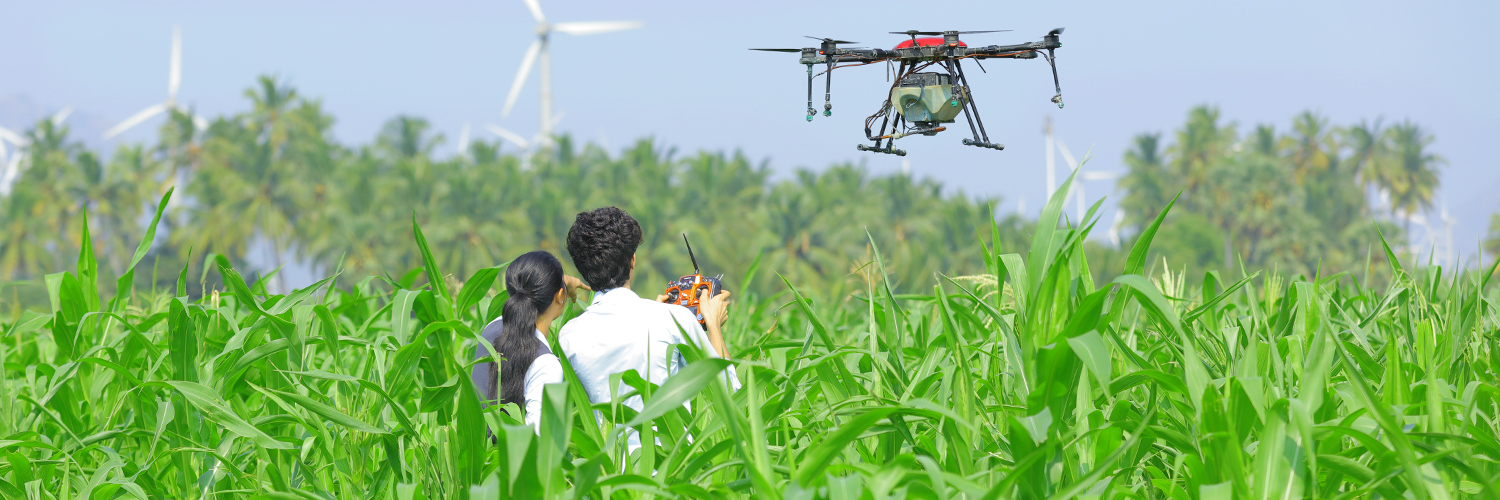
The School of Agricultural Sciences (JU-SOAGS) at Joy University employs a multidisciplinary approach, aligned with the Indian Council of Agricultural Research guidelines, to deliver its curriculum. JU-SOAGS offers four-year programs in BSc. (Hons.) Agriculture, BSc. (Hons.) Horticulture, and B. Tech. (Agricultural Engineering). The academic programs feature a balanced, semester-based structure and curricula designed to foster innovation, research, and in-depth exploration, addressing the evolving demands of the agricultural sector in India. Students benefit from immersive learning experiences through the Rural Work Experience, the Experiential Learning Program, and the hands-on training components integrated into the program. This experiential learning model actively engages students in concrete and meaningful experiences, promoting enhanced reflection, conceptualization, and practical application of knowledge.
Programmes Offered
B.Tech.
- Agricultural Engineering
- Dairy Technology Apply Now
B.Sc. (Hons.)
- Agriculture
- Horticulture Apply Now
M.Sc. (Agriculture)
- Agronomy
- Agricultural Entomology
- Agricultural Extension Education Apply Now
M.Sc. (Horticulture)
- Floriculture and Landscaping
- Vegetable Science Apply Now
Programmes Structure & Eligibility
| B.Sc. (Hons.) | Duration | Eligibility |
|---|---|---|
| Agriculture | 4 Years |
|
| Horticulture | 4 Years |
| B. Tech | Duration | Eligibility |
|---|---|---|
| Agricultural Engineering | 4 Years |
|
| Dairy Technology | 4 Years |
| M.Sc. (Agriculture) | Duration | Eligibility |
|---|---|---|
| Agronomy | 2 Years |
|
| Agricultural Entomology | 2 Years | |
| Agricultural Extension Education | 2 Years |
| M.Sc. (Horticulture) | Duration | Eligibility |
|---|---|---|
| Floriculture and Landscaping | 2 Years |
|
| Vegetable Science | 2 Years |
Learning Outcomes
- Develop a systems-thinking approach to agricultural production and land management, understanding the structures of agriculture-related industries, key factors influencing their location, environmental impact, sustainability, profitability, and international trade competitiveness, as well as the biophysical, economic, and social factors affecting production systems.
- Acquire the ability to critically evaluate knowledge from diverse scientific, economic, and social sources.
- Join the skills to effectively disseminate scientific and industry-related information to various audiences.
- Develop the ability to analyze agricultural problems and evaluate them scientifically to reach appropriate, evidence-based solutions.
- Enhance communication skills across a range of media, ensuring effective exchange of information in different contexts.
- Build the ability to collect, interpret, and analyze agricultural data for informed decision-making.
- Understand and apply research methodologies necessary for designing and interpreting agricultural experiments.
- Uphold the highest standards of academic and intellectual integrity, demonstrating professionalism and ethical conduct in all academic and industry-related activities.
Expected Graduate Attributes
- Demonstrate a strong sense of intellectual integrity and adhere to the ethics of scholarship.
- Acquire in-depth knowledge in their chosen field(s) of specialization.
- Achieve a high level of proficiency in writing, research, problem-solving, and communication.
- Cultivate critical and creative thinking skills, with a commitment to continuous self-directed learning.
- Be adaptable to various learning methods, including the effective use of information and communication technologies.
- Become well-informed citizens who can actively contribute to their communities, regardless of location.
- Accept and embrace social and civic responsibilities.
- Advocate for environmental sustainability and take proactive steps toward improving ecological well-being.
- Develop a broad global perspective, with strong respect for human rights, equity, and ethical principles.
New Targeted Skill Sets
- Demonstrate a profound respect for truth, intellectual and professional integrity, and the ethics of scholarship.
- Exhibit the ability to engage in independent critical thinking, rational inquiry, and self-directed learning.
- Develop the ability to derive, interpret, and analyze ecological, biological, social, technical, or economic information from primary sources.
- Be aware of, and predict in utilizing, appropriate communication technologies and methods for this storage, management, and analysis.
- Cultivate creativity and innovation through the application of acquired skills and knowledge in practical contexts.
- Integrate knowledge across a wide range of disciplines to address and solve problems in applied situations.
- Demonstrate highly developed written communication skills for informed dialogue with individuals and groups from industry, government, and the community.
- Exhibit strong oral communication skills to facilitate informed dialogue and collaboration with individuals and groups from industry, government, and the community.
- Appreciate and respect social and cultural diversity in both regional and global contexts.
- Effectively participate in team settings, contributing to group efforts and achieving common goals.
- Develop the ability to plan, manage time effectively, and oversee small projects to successful completion.
Philosophy
School of Agricultural Sciences (JU- SOAGS) at Joy University has focused on the Rural Agricultural Work Experience (RAWE) which helps the students primarily to understand the rural situations, status of Agricultural technologies adopted by farmers, prioritize the farmers' problems, prepare farm and village development plans and to develop skills & attitude of working with farm families for the overall development in rural area. The timings for RAWE shall coincide with the main cropping season.
Objectives
- To provide an opportunity to the students to understand the rural setting in relation to agriculture and allied activities.
- To make the students familiar with socio-economic conditions of the farmers and their problems.
- To impart diagnostic and remedial knowledge to the students relevant to real field situations through practical training.
- To develop communication skills in students using extension teaching methods in transfer of technology.
- To develop confidence and competence to solve agricultural problems.
- To acquaint students with on-going extension and rural development programmes.
Faculty & Staff
| Name | Designation | |
|---|---|---|
| Dr. Pooja Krishna J, M.Sc, Ph.D | Assistant Professor & Assistant Dean | poojakrishna@joyuniversity.co.in |
| Dr. Pungavi R, M.Sc, Ph.D., | Assistant Professor | pungavi@joyuniversity.co.in |
| Mrs. Feba Varghese, M.Sc., | Assistant Professor | febavarghese@joyuniversity.co.in |
| Prof. Dr. Jerish J R Ph.D. | Assistant Professor | jerish@joyuniversity.co.in |
| Prof. Sreelakshmi P M.Sc. | Assistant Professor | sreelakshmi@joyuniversity.co.in |
| Mrs. K. Priyadharshini, MBA, D.MRT | Lab Instructor | - |
| Mrs. Sinha R, MCA | Office Executive | - |